

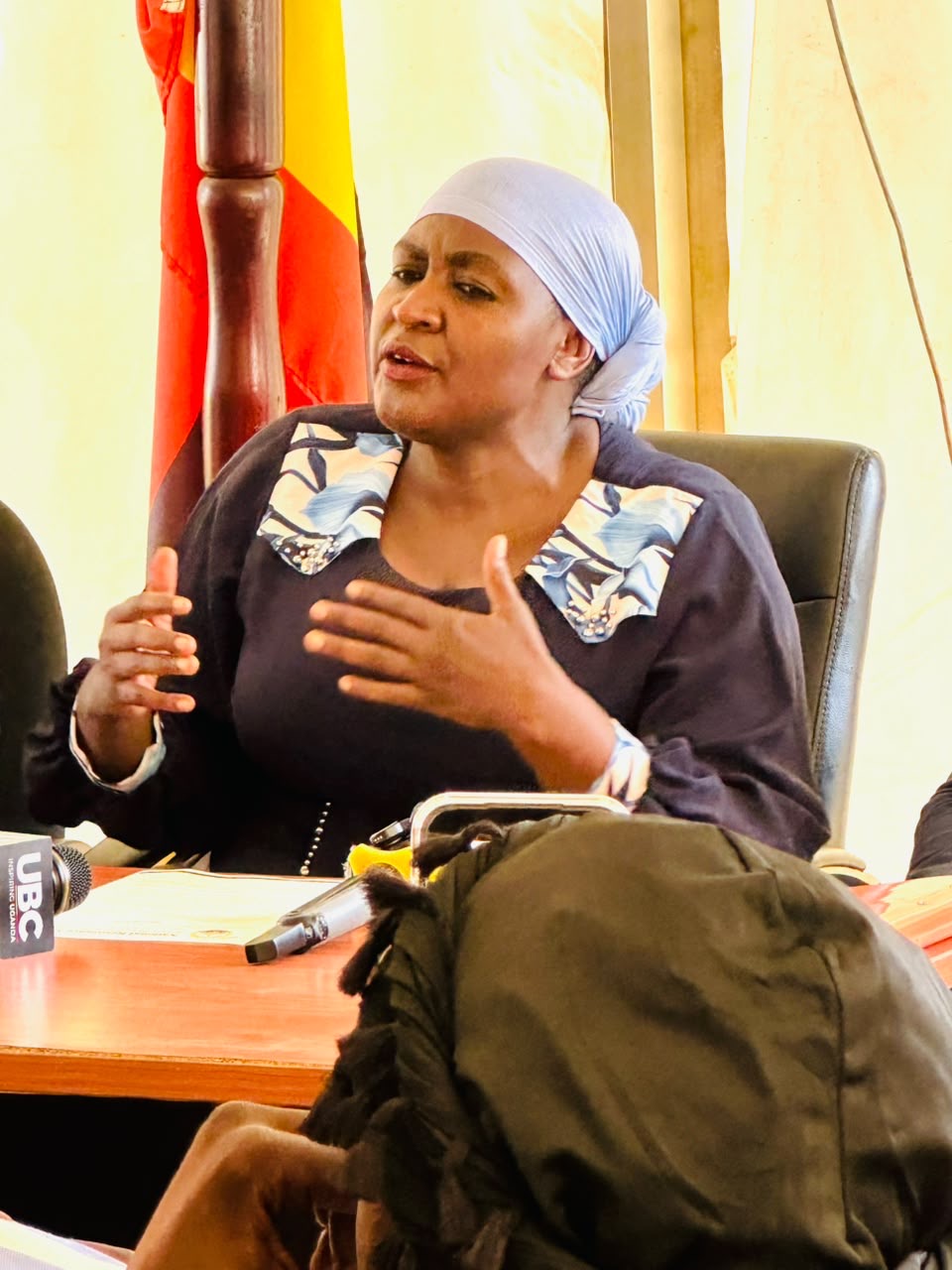
 Senior Presidential Advisor and Head of the Office of the National Chairman (ONC), Hajjat Hadijah Namyalo Uzeiye, has called for a comprehensive review of Uganda’s taxation policies, warning that excessive taxes and administrative inefficiencies are threatening the survival of local businesses. Speaking at a press conference at her office in Kyambogo, Namyalo said growing complaints from traders, business protests and closures reflected economic challenges that government could no longer afford to ignore. She urged authorities to address these concerns and restore confidence among business operators.
Namyalo questioned the contradiction between government’s wealth-creation agenda and taxation policies that increasingly make it difficult for local enterprises to thrive. She cited import duties introduced under the 2025/2026 financial-year measures, including US$2 per kilogram for imported fabrics and US$2.5 per kilogram for garments. Combined with VAT, withholding tax, infrastructure levies and other import-related charges, she argued, these costs increase the burden on traders, erode profit margins and ultimately raise prices for consumers.
She also raised concerns about unfair competition between Ugandan retailers and foreign-owned enterprises, noting that some foreign investors initially establish manufacturing and wholesale operations before expanding into retail, directly competing with indigenous traders. Namyalo observed that local entrepreneurs often depend on personal savings and bank loans while meeting rental expenses, paying employees and fulfilling tax obligations, making it increasingly difficult for them to compete with larger businesses operating in the same market.
The ONC official further questioned URA’s tax assessment and goods-clearance procedures, citing complaints of inconsistent valuations, additional assessments after clearance, prolonged delays and escalating storage costs. She also called for investigations into allegations of corruption, extortion and irregularities within the revenue authority, insisting that traders who have fulfilled their tax obligations should not face repeated charges or unnecessary administrative hurdles.
Recalling engagements between business representatives and government in 2023 and 2024, Namyalo said traders had sought an opportunity to present their concerns directly to President Yoweri Kaguta Museveni. She questioned whether the President was receiving an accurate account of the challenges confronting businesses, calling for a review of trade and taxation laws, competitive import duties, efficient border-clearance systems, regular consultations between URA and traders, and stricter enforcement of regulations governing foreign business operators.
Reaffirming the ONC’s commitment to advocating for economic redress, Namyalo said the office would continue challenging policies and institutional practices that undermine Ugandans’ economic interests. She warned that Vision 2040 and the broader national wealth-creation agenda would remain difficult to achieve if local enterprises continued facing excessive taxation, unfair competition and bureaucratic inefficiencies. She urged President Museveni and relevant government institutions to engage directly with traders and implement meaningful reforms, emphasising that business people are willing to pay taxes but deserve a fair, transparent and predictable system that allows them to grow, create jobs and contribute to national development.
