

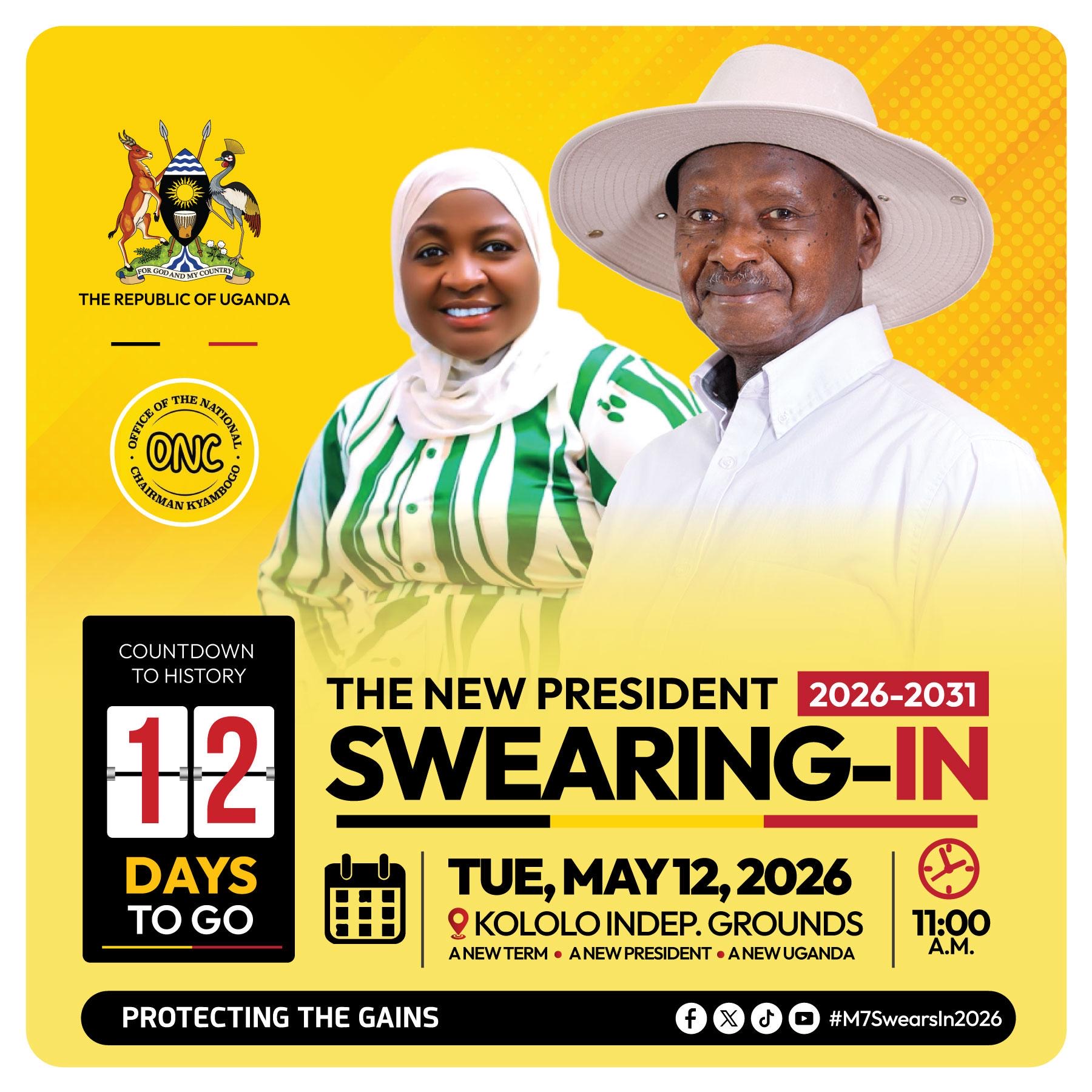
 The clock is steadily ticking towards a moment of significant national importance as preparations intensify for the highly anticipated Swearing-In Ceremony scheduled for 12th May 2026. This historic occasion is set to mark the formal assumption of office by President-elect H.E. Yoweri Museveni, who is expected to take the constitutional oath for another term in leadership. Across the nation, attention is increasingly turning toward this defining political milestone.
The grand event is slated to take place at the iconic Kololo Independence Grounds in Kampala, a venue long associated with major state functions and national celebrations. Its selection underscores the ceremonial weight and symbolic significance of the occasion, reflecting continuity, stability, and institutional tradition within Uganda’s governance framework. The grounds are expected to host a highly structured and tightly secured gathering of dignitaries, international guests, and citizens.
In accordance with established state protocol, the ceremony will be conducted under meticulous planning, featuring elaborate military honours, official processions, and constitutional rituals. The atmosphere is anticipated to be one of grandeur and national reflection, as the leadership transition process is formalized in the presence of key constitutional office bearers and regional representatives. The event will also serve as a platform to reaffirm commitments to national development priorities.
Security arrangements and logistical coordination are already reported to be at an advanced stage, with various state organs working in synchrony to ensure order, dignity, and smooth execution. The significance of the occasion necessitates heightened preparedness, given the expected influx of attendees and the importance of maintaining ceremonial decorum befitting a presidential inauguration.
As the date draws nearer, anticipation continues to build both within political circles and among the general populace. The Swearing-In Ceremony is widely regarded not only as a constitutional formality but also as a moment of national reflection, continuity, and renewed mandate. It stands as a pivotal event in Uganda’s political calendar, symbolizing the ongoing trajectory of leadership and governance.
