Hadija Namyalo Uzeiye, commonly known as Hajjat Hadija Namyalo, has emerged as a prominent figure in Uganda through her dual role in grassroots empowerment and political organization. Operating under the Office of the National Chairman (ONC), she has positioned herself as a bridge between government leadership and ordinary citizens, particularly those struggling with poverty. Her work is closely aligned with the ruling party’s agenda and focuses on visible, practical interventions.
One of her main approaches to fighting poverty has been the direct distribution of livelihood tools and startup support. Rather than relying solely on large-scale government programs, she has overseen initiatives that provide items like sewing machines, hair salon equipment, and small livestock to individuals and community groups. This method aims to enable beneficiaries to immediately start income-generating activities, especially among unemployed youth and women.
Namyalo has also been vocal about inefficiencies in traditional poverty alleviation systems. She argues that many government funds fail to reach intended beneficiaries due to bureaucratic delays and mismanagement. By promoting a more hands-on and direct delivery model, she presents her work as a practical alternative that ensures assistance reaches people at the grassroots level without significant interference.
In addition to material support, she encourages citizens to take advantage of existing government programs while supplementing them with her outreach efforts. This combination of empowerment and advocacy has helped her build strong relationships within communities, especially in urban and peri-urban areas. Her messaging often emphasizes self-reliance, productivity, and loyalty to the broader national development agenda.
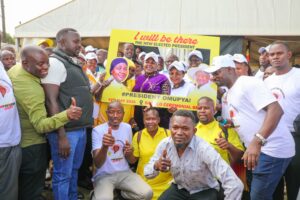
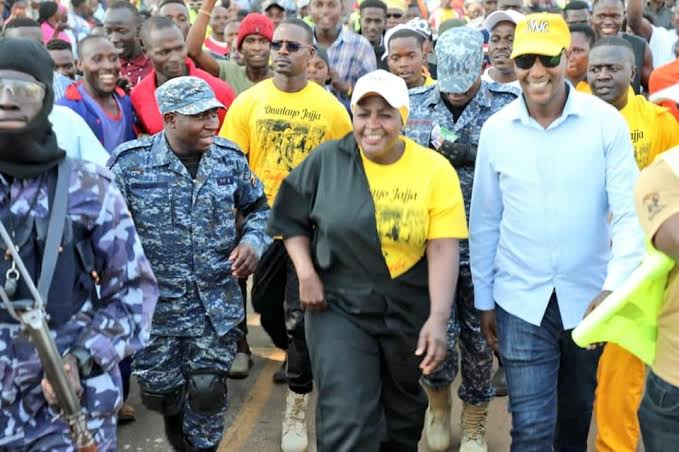
Politically, Namyalo has played a significant role in mobilizing support for Yoweri Museveni and the National Resistance Movement (NRM). Through ONC structures, she organizes community engagements, donation drives, and public events that strengthen grassroots connections to the ruling party. Her efforts particularly target young people, often referred to as “Bazzukulu,” encouraging them to actively participate in elections.
Overall, her influence stems from linking economic empowerment with political mobilization. By providing tangible support to communities while simultaneously rallying them behind the президент, she has become an important figure in shaping voter sentiment. This combination of social intervention and political strategy has made her a notable player in Uganda’s recent electoral dynamics.