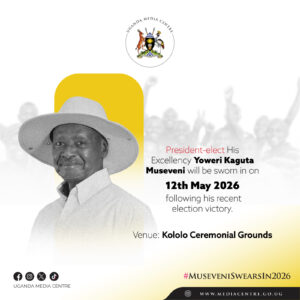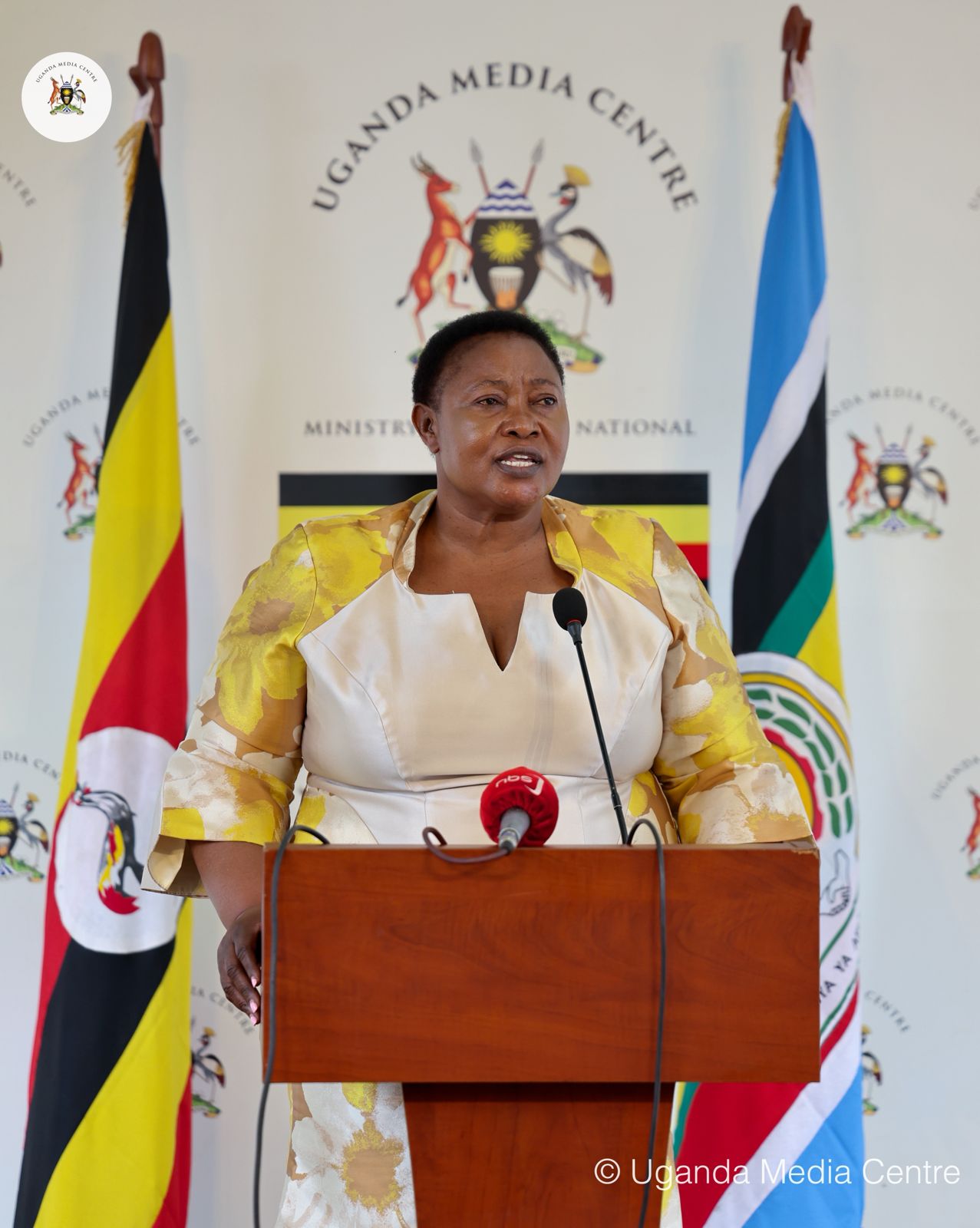
Honorable Milly Babalanda announced that the swearing-in ceremony of President-elect Yoweri Kaguta Museveni is scheduled for 12th May 2026 at Kololo Ceremonial Grounds. This event will formally inaugurate a new presidential term, symbolizing both continuity in leadership and the reaffirmation of the country’s political trajectory under the ruling establishment.
The 2026 inauguration will be conducted under the theme, “Protecting the Gains, Making a Qualitative Leap into High Middle-Income Status,” reflecting a strategic emphasis on consolidating past achievements while accelerating Uganda’s transition into a more advanced stage of economic development. The theme encapsulates a forward-looking vision anchored in sustainability, structural transformation, and enhanced productivity.
According to the Minister, Ugandans renewed their mandate for President Museveni with an overwhelming 71.65% of the vote, underscoring widespread confidence in the ideological framework of the National Resistance Movement (NRM). This framework is premised on the pillars of democracy, patriotism, Pan-Africanism, and socio-economic transformation, which the government credits for shaping the nation’s governance and development agenda.
She further highlighted that Uganda has experienced over three decades of relative peace and stability under NRM leadership, conditions deemed essential for fostering national cohesion, institutional maturation, and sustained economic progress. This stability, she noted, has laid a durable foundation upon which the country continues to pursue prosperity and inclusive growth.
On the economic front, Babalanda pointed to significant expansion, noting that Uganda’s economy has nearly doubled in size—from Shs 128.5 trillion in 2019 to over Shs 226 trillion—despite external shocks such as the COVID-19 pandemic. She also cited Uganda’s graduation from the Least Developed Countries category as a landmark achievement, signaling steady advancement toward middle-income status and long-term economic resilience.
Additionally, the government attributes notable poverty reduction to wealth-creation initiatives such as the Parish Development Model (PDM), Emyooga, and Operation Wealth Creation (OWC), which have reportedly reduced subsistence living from 68% to 33%. Improvements in access to electricity, healthcare, clean water, and transport infrastructure have further elevated living standards and life expectancy. Meanwhile, national security agencies have intensified preparedness measures to ensure that the forthcoming inauguration proceeds in a secure, orderly, and peaceful environment.