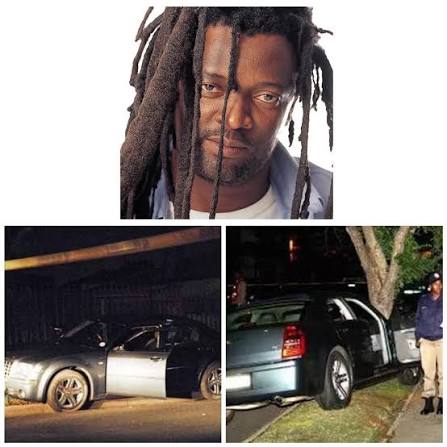
The fatal shooting of Lucky Dube in 2007 sent shockwaves across South Africa and the global music community. Widely regarded as one of Africa’s most influential reggae artists, Dube was gunned down in what authorities later described as a botched carjacking. The incident occurred in Johannesburg, a city long grappling with violent crime, and immediately raised questions about public safety and the targeting of motorists.
According to police reports and court testimony, the attackers had been searching for a specific vehicle model to hijack—a Chrysler 300C—when they encountered Dube. Unaware of his identity, they allegedly assumed he was a foreign national and singled him out as a target. The shooting happened as Dube was dropping off his children, turning an ordinary moment into a scene of tragedy witnessed by those closest to him.
Investigations revealed that the assailants acted quickly and with little planning beyond the intended car theft. One of the convicted men, Sifiso Mhlanga, later stated that he fired his weapon in a moment of panic, believing Dube was reaching for a gun. In reality, the musician was reportedly attempting to hand over his car keys, a detail that underscored the senselessness of the violence.
The case proceeded through the courts, culminating in a high-profile trial at the Johannesburg High Court. Three men—Sifiso Mhlanga, Mbuti Mabe, and Julius Gxowa—were ultimately found guilty of murder and related charges, including armed robbery. In April 2009, all three received life sentences, bringing a measure of legal closure to a case that had captured national attention.
Despite the convictions, Dube’s death continued to resonate deeply with fans and fellow artists. His music, often centered on themes of unity, social justice, and African identity, gained renewed attention in the years following his passing. Tributes poured in from across the continent and beyond, cementing his legacy as not only a performer but also a cultural voice.
The circumstances surrounding the killing also reignited debate about violent crime in South Africa, particularly the prevalence of carjackings and the risks faced by ordinary citizens. For many, the loss of Lucky Dube was more than the death of a celebrity—it was a stark reminder of the human cost of crime and the fragility of life in environments marked by insecurity.