

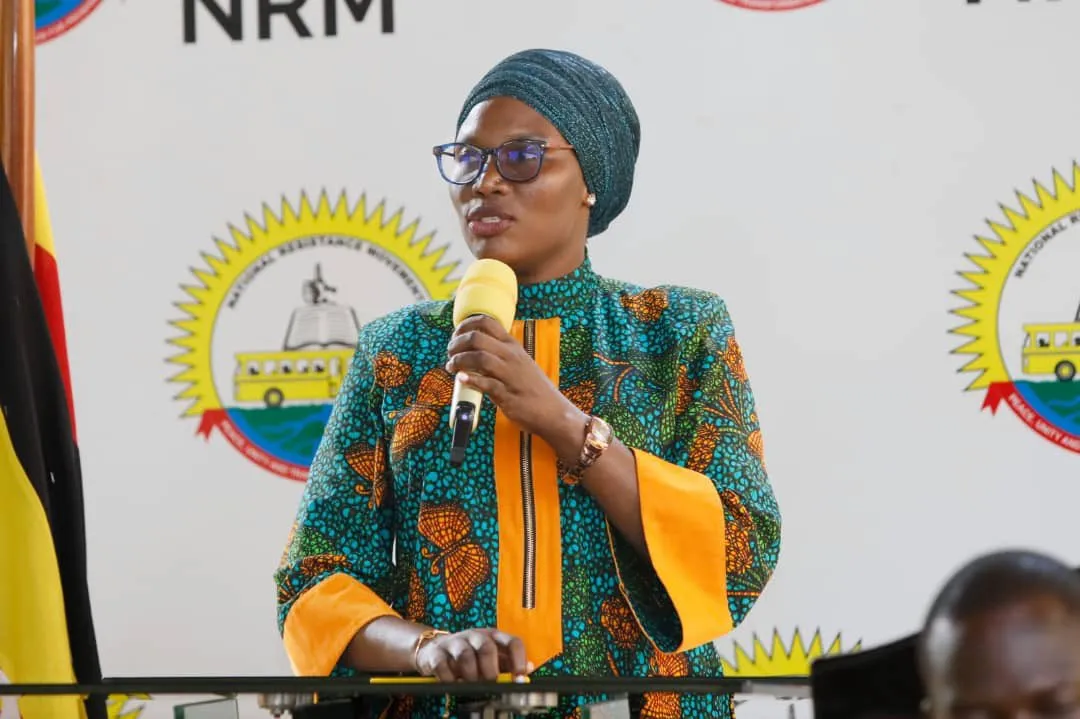
Coordinated Security Directorate has reportedly launched an expansive and highly sensitive investigation into Hajat Madina Naham Ojale, the ruling National Resistance Movement’s Director for Administration and Finance, following explosive allegations of systemic financial impropriety within the party secretariat. Intelligence sources familiar with the inquiry indicate that investigators are examining what appears to be an elaborate network of inflated procurement contracts, fictitious beneficiaries, kickback schemes, and misappropriated operational funds that allegedly siphoned vast sums of money from party coffers while leaving legitimate service providers and youthful workers uncompensated.
According to insiders, the investigation was precipitated by a series of whistle-blower dossiers that painted a deeply troubling portrait of entrenched financial misconduct at the administrative core of one of Africa’s longest-ruling political organisations. Security agencies are now scrutinising procurement documentation, banking transactions, delegate registers, and expenditure records in what observers describe as one of the most politically delicate internal probes the NRM secretariat has confronted in recent years.
Central to the investigation are allegations surrounding the procurement of campaign T-shirts during recent party mobilisation activities. Sources with direct knowledge of the matter claim that official procurement records reflected an approved unit cost of Shs13,000 per T-shirt. However, manufacturers reportedly received only Shs7,000 per unit, leaving an unexplained discrepancy of Shs6,000 on every item supplied. Investigators believe that, when multiplied across tens of thousands of garments, the missing funds could amount to hundreds of millions of shillings.
The financial irregularities allegedly had immediate operational consequences. Suppliers unable to absorb the shortfall reportedly resorted to producing substandard campaign merchandise, while established vendors who resisted illicit deductions were quietly excluded from future contracts in favour of businesses willing to participate in kickback arrangements. Investigators are now attempting to determine whether the inflated pricing structure was deliberately engineered to facilitate systematic diversion of party resources.
The inquiry has since widened to encompass expenditures linked to the NRM Delegates Conference, where investigators suspect a parallel pattern of financial manipulation. Catering firms contracted to provide meals during the high-profile gathering allegedly received only a fraction of the funds budgeted for their services after being compelled to surrender portions of their contract payments as unofficial commissions in exchange for retaining their deals.
The repercussions were reportedly visible throughout the conference itself, as delegates openly complained about inadequate food quality and diminished service standards during an event intended to project organisational discipline and political cohesion. Sources within the secretariat allege that although the full catering budget had been approved and released, significant portions of the allocated funds never reached the service providers tasked with executing the contracts.
Even more disturbing are allegations involving university students recruited to serve as ushers and logistical assistants during the conference. Dozens of young men and women drawn from campuses across Kampala reportedly worked throughout the event under the expectation that they would receive remuneration for their services. Yet multiple sources now claim that, despite the party requisitioning funds designated for their payment, the students remain unpaid months after the conference concluded.
Insiders say the episode has generated quiet resentment within sections of the party, with some officials expressing concern that vulnerable young people who sacrificed academic time and labour in good faith were ultimately abandoned without explanation. For many of the affected students, the incident has become emblematic of a broader collapse in institutional accountability within the secretariat.
Investigators are also examining what sources describe as the most politically combustible dimension of the scandal: the alleged inflation of delegate numbers from the West Nile region, from which Naham Ojale originates. Intelligence reports suggest that fictitious or non-attending delegates may have been inserted into official registers in order to fraudulently claim transport reimbursements and per diem allowances. The regional concentration of the alleged ghost beneficiaries has intensified suspicions that individuals connected to her political network may have profited from the scheme.
A separate strand of the inquiry concerns the Kyankwanzi Leadership Retreat, where investigators reportedly discovered that Naham Ojale’s husband had been listed among individuals entitled to remuneration despite allegedly holding no formal role in the proceedings. Authorities are now assessing whether this constituted unlawful enrichment or abuse of office.
Perhaps the most consequential aspect of the investigation, however, centres on the Finance Director’s personal wealth and lifestyle. Security operatives have reportedly initiated a lifestyle audit focusing on a high-value mansion recently acquired in Kololo, one of Kampala’s most affluent and exclusive residential neighbourhoods. Intelligence officials are said to be examining whether the property’s estimated value is commensurate with the legitimate earnings of a party administrator of her standing.
At the NRM Secretariat offices along Kyadondo Road, sources describe an atmosphere of growing anxiety and internal unease as investigators continue to review financial records and procurement files. Officials approached for comment have largely declined to address the allegations publicly, though insiders acknowledge that the probe is now an open secret within senior party circles.
The unfolding scandal emerges at a politically precarious moment for the ruling National Resistance Movement, which is preparing for the 2026 general elections amid renewed scrutiny over governance, accountability, and public trust. With Yoweri Museveni expected to seek another term in office, the allegations threaten to undermine the party’s longstanding narrative of discipline, stability, and administrative competence.
Whether the investigation ultimately culminates in criminal prosecutions, internal disciplinary measures, or a quieter political resolution remains uncertain. What is clear, however, is that the inquiry has already exposed profound concerns about financial stewardship and institutional integrity at the highest levels of the NRM secretariat. Investigators continue to follow the paper trail, and intelligence sources suggest that additional revelations may yet emerge as the probe deepens.
