

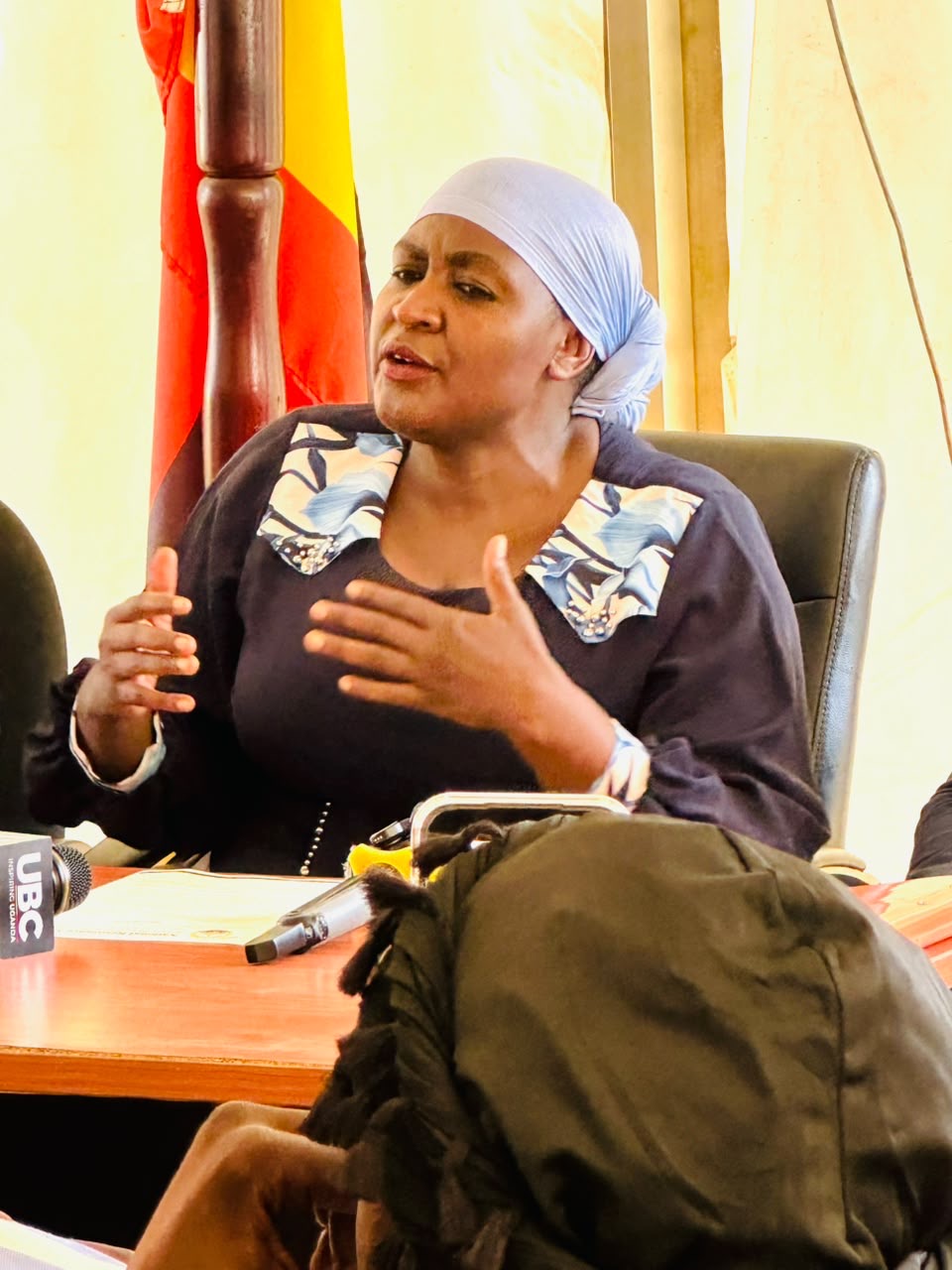

 Office of the National Chairman (ONC) Manager and Senior Presidential Adviser Hadijah Namyalo has called on the government to review the implementation of the charcoal policy, warning that restrictions introduced without adequate consultation and affordable alternatives could worsen the economic hardships facing ordinary Ugandans.
Speaking at a press conference, Namyalo urged policymakers to listen to citizens struggling with the rising cost of living, emphasising that environmental conservation must go hand in hand with protecting household livelihoods. She questioned the practicality of requiring low-income families to abandon charcoal and firewood when many cannot afford alternative cooking fuels.
Her concerns follow a parliamentary directive issued by Speaker of Parliament Jacob Markson Oboth-Oboth on 14 October 2026, suspending enforcement of the charcoal-trade ban pending a government statement on the policy and the availability of alternative energy sources. The directive came amid concerns that enforcement without affordable alternatives could place additional pressure on households that depend on charcoal and firewood for cooking.
Namyalo called for government-supported access to gas cookers, affordable refills, public sensitisation and training on safe usage. She also advocated stronger environmental protection measures to address forest degradation, particularly in Mabira, Budongo and Maramagambo forests. She urged government to invest in tree planting, reforestation and community awareness, arguing that conservation efforts must be practical, sustainable and sensitive to the financial realities of ordinary citizens.
Turning to the economy, Namyalo expressed concern over the weakening Uganda shilling, rising living costs and the growing pressure on households and businesses. She cited reported Uganda Bureau of Statistics figures showing that annual headline inflation rose from 4.1 per cent in August to 4.6 per cent in September 2026. She warned that rising prices and expensive credit could further undermine household welfare, agricultural production, business growth and opportunities for young entrepreneurs.
Namyalo also called for greater scrutiny of banking charges and lending rates, arguing that expensive financial services can discourage investment and restrict small businesses from accessing the capital they need to grow. She urged policymakers and financial regulators to explore measures that would make credit more affordable and banking services more accessible, particularly for traders, farmers and young people seeking to establish sustainable enterprises.
In a pointed message to policymakers, Namyalo questioned whether certain policies, through their design or implementation, could undermine the good-governance agenda championed by President Yoweri Kaguta Museveni. She urged government leaders to ensure that policies introduced in the President’s name reflect the broader objective of improving citizens’ welfare. She stressed that adequate consultation, accountability and empathy are essential to ensuring that government decisions do not unintentionally deepen public hardship or erode citizens’ confidence in leadership.
Namyalo concluded by calling for a balanced, people-centred approach that protects Uganda’s natural resources while easing the economic burden on vulnerable households. She urged government to expand access to affordable cooking alternatives, strengthen environmental restoration, address the rising cost of living and improve access to affordable credit. She maintained that sustainable development must deliver tangible benefits to ordinary Ugandans, ensuring that environmental protection and economic progress complement each other rather than leave families struggling to meet their most basic needs.
