

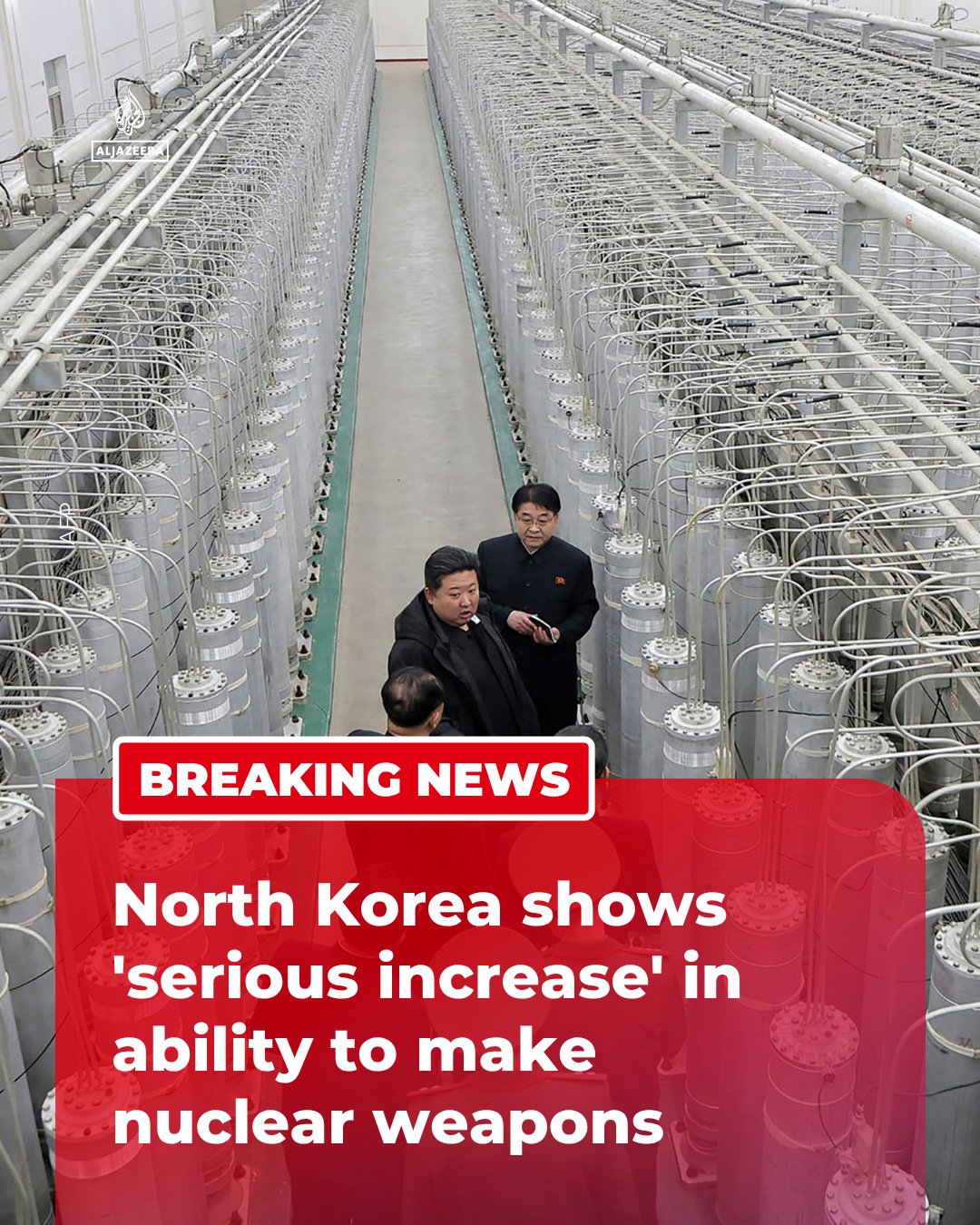
North Korea’s nuclear weapons program is accelerating at an alarming rate, according to the International Atomic Energy Agency, raising urgent concerns about global security and regional stability.
Speaking this week, Rafael Grossi issued a stark warning, revealing a “rapid increase” in activity at the country’s main nuclear hub, the Yongbyon Nuclear Scientific Research Center. He described the development as a “very serious increase” in North Korea’s ability to produce nuclear weapons.
Surge in Reactor and Enrichment Activity
Recent assessments indicate that multiple key facilities at Yongbyon are now fully operational, including its five-megawatt reactor and reprocessing plants used to extract plutonium. A light-water reactor—long suspected of being capable of producing weapons-grade material—also appears to be active.
Satellite imagery and independent monitoring groups have further pointed to the near completion of an additional uranium enrichment facility, a move that could significantly boost North Korea’s capacity to produce nuclear fuel.
Experts say these developments suggest a shift from limited production to continuous, industrial-scale nuclear weapons manufacturing.
A Growing Nuclear Arsenal
Analysts now estimate that North Korea possesses a few dozen nuclear warheads, with some projections placing the number closer to 50. With new enrichment capabilities coming online, that figure could rise steadily in the coming years.
The Yongbyon complex has long been central to Pyongyang’s nuclear ambitions, producing both plutonium and highly enriched uranium—the two essential components for atomic weapons.
Limited Oversight, Rising Uncertainty
The situation is further complicated by the absence of international inspectors. The IAEA has not had access to North Korea since 2009, forcing it to rely on satellite imagery and indirect intelligence to track developments.
This lack of transparency has made it increasingly difficult to determine the full scope of the country’s nuclear capabilities, fueling fears that the real arsenal may be even larger.
Global Tensions Mount
The latest warning comes as North Korea continues to defy international sanctions and United Nations resolutions aimed at curbing its nuclear and missile programs.
Although the country has not conducted a nuclear test since 2017, experts caution that ongoing activity at Yongbyon indicates steady progress behind the scenes—potentially bringing the regime closer to more advanced and deployable weapons.
Grossi stressed the urgent need for renewed diplomatic efforts, warning that without engagement, the situation could escalate further.
A Dangerous Turning Point
The rapid expansion of North Korea’s nuclear capabilities marks a critical moment for global security. As tensions simmer and oversight remains limited, the international community faces mounting pressure to respond to what could become one of the fastest-growing nuclear arsenals in the world.
