

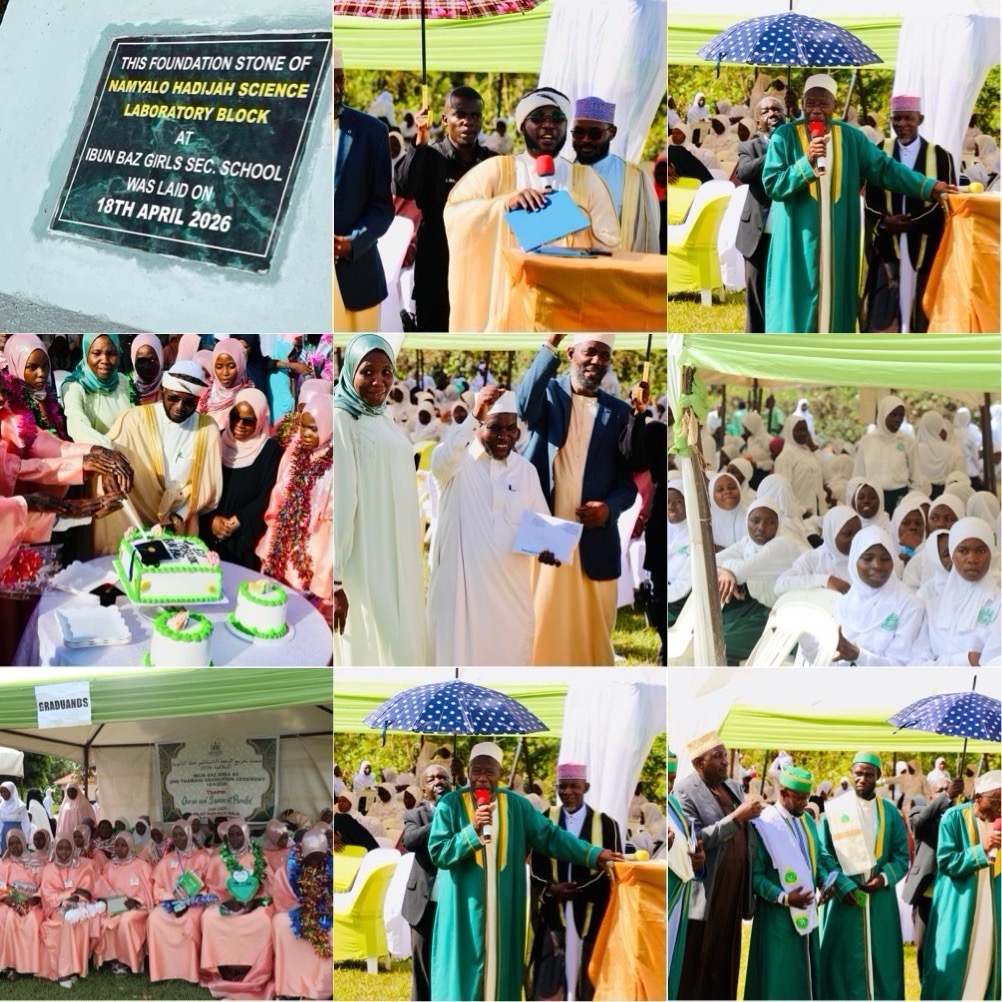
Hajjat Hadijah Namyalo Uzeiye has reaffirmed her commitment to advancing education and empowering the girl child, as she delivered a keynote message during the second Thanawi graduation ceremony of Ibun Baz Girls Secondary School in Busei, Iganga District. The event, held under the theme “Qur’an and Science Are Not Parallel,” brought together religious leaders, education officials, parents and local government representatives to celebrate academic achievement and reflect on the role of holistic education in national development.
In a speech delivered on her behalf by Wakiso District Khadhi, Sheikh Erias Kigozi, Ms Namyalo expressed gratitude for the progress made by the school and commended the efforts of teachers, administrators and parents in nurturing disciplined and focused learners. She emphasised that education, particularly for girls, must be grounded in strong moral values and a sense of purpose if it is to yield meaningful and lasting impact.
She said empowering the girl child through education remains one of the most effective pathways to transformation, noting that educated women play a critical role in strengthening families and uplifting communities. She urged the graduates to view their academic success not as an endpoint, but as a foundation upon which to build lives defined by integrity, humility and service to others.
The ceremony also highlighted practical steps towards improving learning conditions at the school. A financial contribution from Ms Namyalo was announced to support the construction of a new science laboratory block, a development welcomed by both school leaders and the wider community. Sheikh Kigozi further pledged support in the form of construction materials, underscoring a shared commitment to enhancing science education infrastructure.
Local leaders and school administrators used the occasion to call for increased investment in education, particularly in science facilities and learning resources. As the ceremony concluded, there were renewed appeals for sustained collaboration between government, community stakeholders and development partners to ensure that students—especially girls—are equipped with the knowledge and skills needed to contribute meaningfully to the country’s future.
