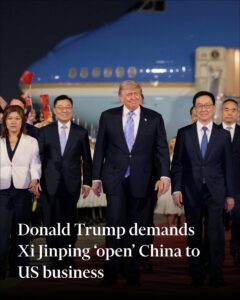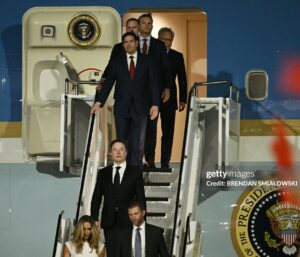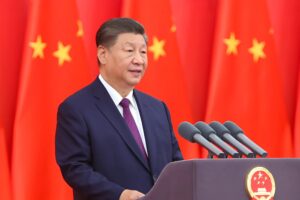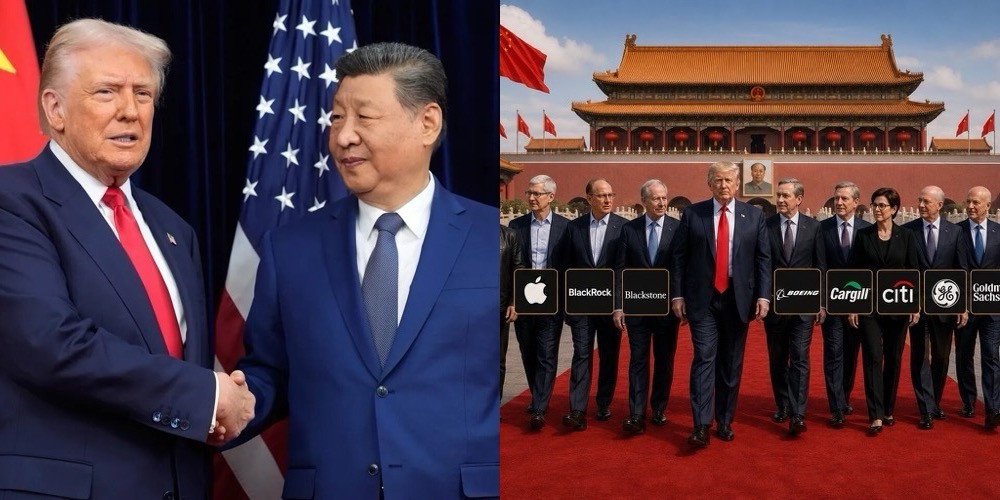
The scale of this diplomatic and economic mission is unlike anything seen in modern history. President Donald Trump landed in China accompanied by some of the most powerful executives in the world, representing industries that shape technology, finance, aviation, agriculture, energy, and global manufacturing. The presence of figures such as Elon Musk, Tim Cook, Jensen Huang, and Larry Fink signals that this trip is far more than a political visit — it is being framed as a high-stakes economic summit with worldwide implications.
At the center of the discussions is the possibility of massive trade agreements and strategic partnerships between the United States and China. With tensions between the two superpowers affecting supply chains, semiconductors, electric vehicles, artificial intelligence, and global markets, this meeting with Chinese President Xi Jinping could influence the direction of the world economy for years to come. The inclusion of leaders from Nvidia, Apple, Qualcomm, Micron, and Tesla highlights the enormous importance of technology and manufacturing in the negotiations.
Financial power is also heavily represented on the trip. Executives from BlackRock, Blackstone, Goldman Sachs, and Citigroup are among the most influential figures in global banking and investment, controlling trillions of dollars in assets and financial activity. Their participation suggests that discussions may extend beyond trade into investment access, currency cooperation, infrastructure financing, and future economic expansion between East and West.
The presence of CEOs from Boeing, General Electric, and Cargill further emphasizes the broad scope of the mission. Aviation, energy, transportation, food production, and industrial development remain critical pillars of global commerce, and any agreements reached could affect everything from airline manufacturing and agricultural exports to energy systems and international logistics. Such a concentration of corporate influence traveling alongside a political figure is virtually unprecedented.
Trump has also hinted that additional business leaders are joining the delegation, though their names have not yet been disclosed. This has fueled speculation that even larger negotiations may be taking place behind closed doors involving sectors such as artificial intelligence, defense technology, pharmaceuticals, telecommunications, and infrastructure development. Observers around the world are closely monitoring the trip, recognizing that the outcomes could reshape international business relationships and geopolitical alliances.
Whether viewed as a diplomatic breakthrough, an economic power move, or a historic attempt to redefine U.S.-China relations, the magnitude of this trip is impossible to ignore. Rarely has the world witnessed such a gathering of political influence and corporate power traveling together with the stated goal of securing transformative agreements. If major deals emerge from these meetings, this journey could become one of the most consequential economic missions of the modern era.